
Investment Chart Allocations and Cryptocurrency
0%
Overview of Sample Investment Charts and Allocations
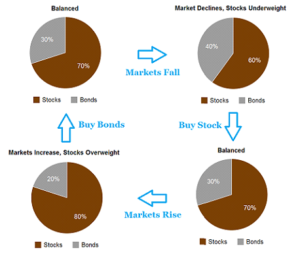
Sample Investment Chart and Allocation
- Conservative Portfolio
- Bonds: 60%
- Stocks: 20%
- Cash/Cash Equivalents: 10%
- Real Estate: 5%
- Commodities: 5%
- Moderate Portfolio
- Bonds: 40%
- Stocks: 40%
- Cash/Cash Equivalents: 10%
- Real Estate: 5%
- Commodities: 5%
- Aggressive Portfolio
- Bonds: 20%
- Stocks: 60%
- Cash/Cash Equivalents: 5%
- Real Estate: 10%
- Commodities: 5%
Directions for Diversification
- Asset Allocation: Spread investments across different asset classes (stocks, bonds, real estate, commodities, cash) to reduce risk.
- Geographical Diversification: Invest in different regions (North America, Europe, Asia) to mitigate region-specific risks.
- Sector Diversification: Allocate funds across various sectors (technology, healthcare, finance, consumer goods) to avoid sector-specific downturns.
- Time Diversification: Invest regularly over time (dollar-cost averaging) to reduce the impact of market volatility.
- Risk Assessment: Regularly review and adjust your portfolio according to your risk tolerance and financial goals.
Types of Cryptocurrencies
- Bitcoin (BTC)
- The first and most well-known cryptocurrency, often referred to as digital gold. It operates on a decentralized blockchain and is used primarily as a store of value and medium of exchange.
- Ethereum (ETH)
- A decentralized platform that enables smart contracts and decentralized applications (DApps) to be built and run without any downtime, fraud, control, or interference from a third party.
- Ripple (XRP)
- A digital payment protocol that is designed for fast, low-cost international payments. Ripple’s consensus ledger is unique in that it does not require mining.
- Litecoin (LTC)
- Created as the “silver to Bitcoin’s gold,” Litecoin offers faster transaction times and a different hashing algorithm (Scrypt) compared to Bitcoin’s SHA-256.
- Bitcoin Cash (BCH)
- A fork of Bitcoin that was created to accommodate a larger block size to allow for more transactions to be processed.
- Cardano (ADA)
- A blockchain platform for innovators, providing tools and technologies to create and manage digital assets and smart contracts. It aims to solve issues related to scalability, interoperability, and sustainability.
- Polkadot (DOT)
- A multi-chain network that aims to connect different blockchains, allowing them to interoperate and share information securely.
- Chainlink (LINK)
- A decentralized oracle network that provides reliable, tamper-proof inputs and outputs for complex smart contracts on any blockchain.
- Binance Coin (BNB)
- Initially created as a utility token for discounted trading fees on the Binance Exchange, it has expanded to various applications including payment for transaction fees on Binance Chain.
- Tether (USDT)
- A stablecoin that is pegged to the value of the U.S. dollar, providing a stable asset for trading and transactions.
New Section
Chart Allocations and Cryptocurrency